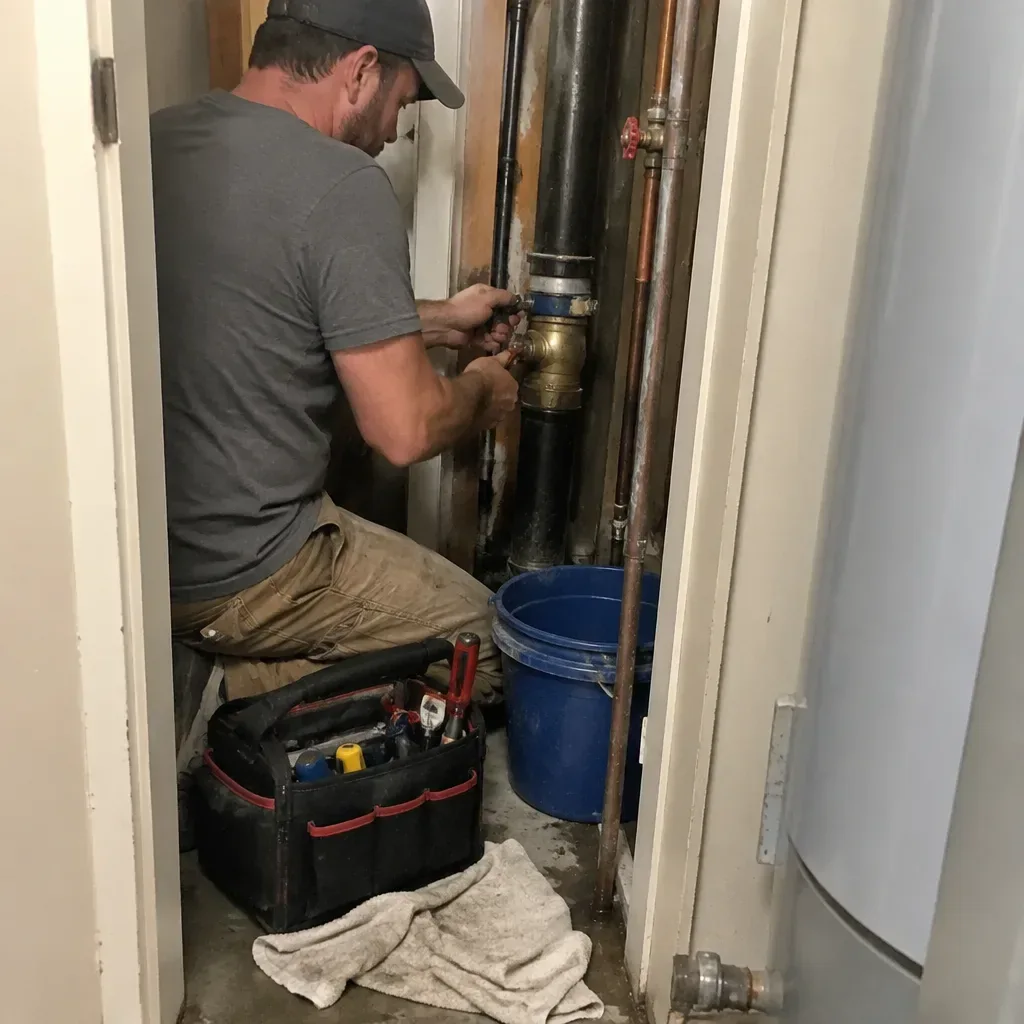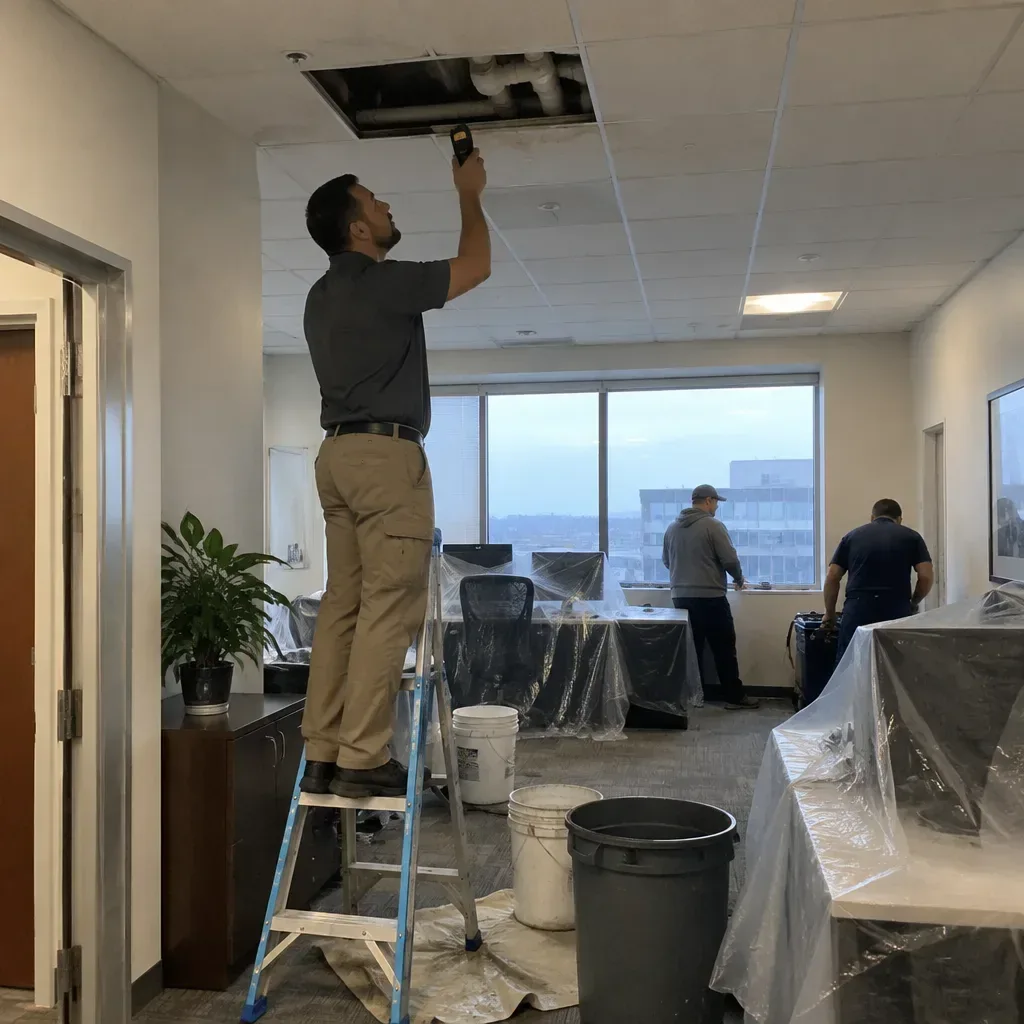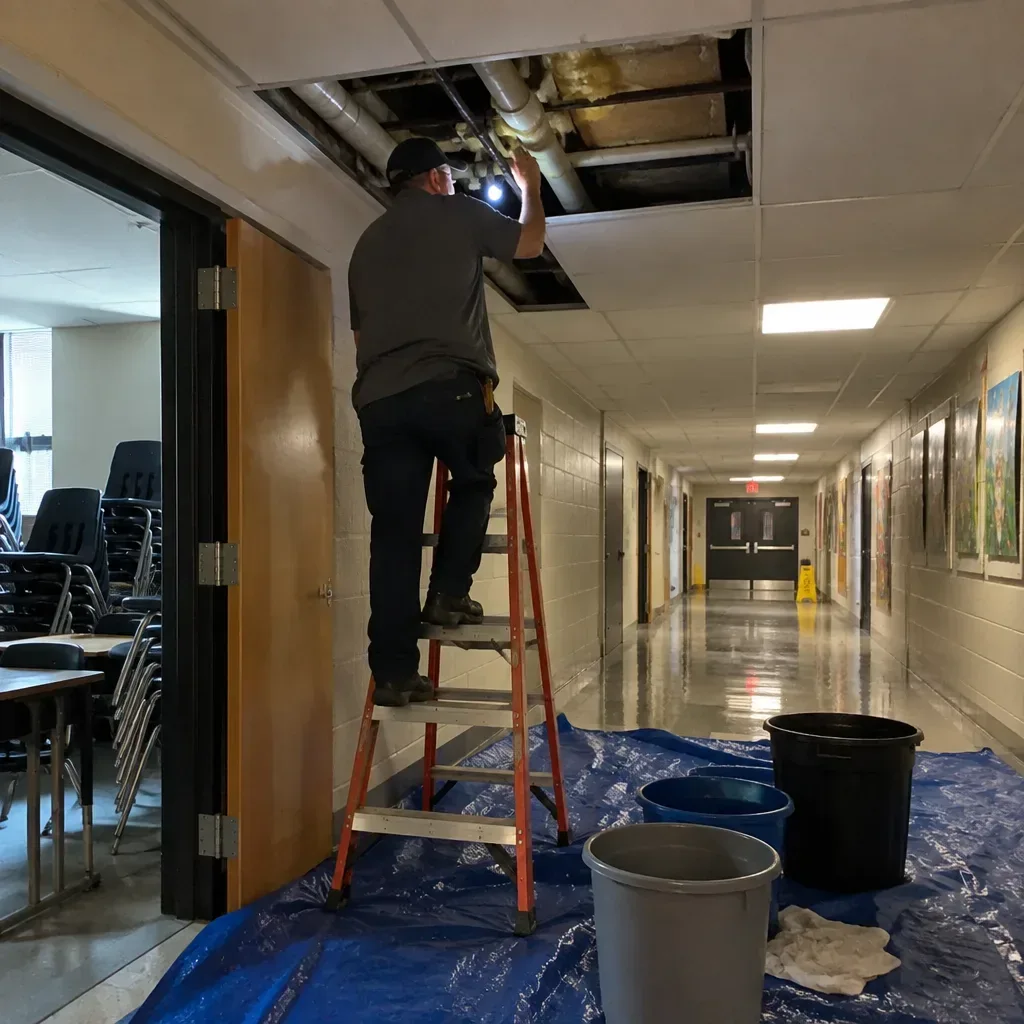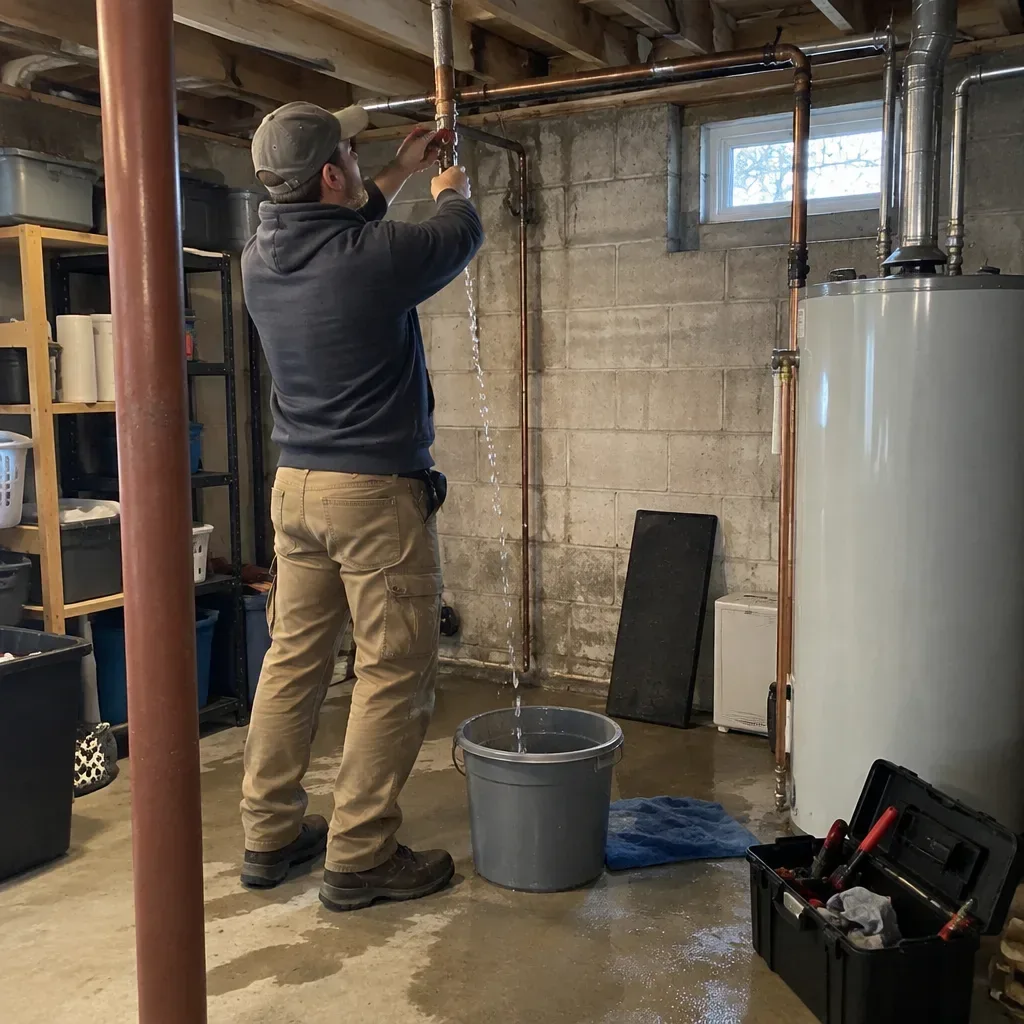
Describe the Signs You Observed
When you call a plumber about a possible burst pipe, start with what you have observed: where water is showing, what it looks or sounds like, and whether it is still appearing. An active leak can keep adding water to nearby surfaces while you gather details. Share the facts you can see without guessing at the cause. In Brockton, a clear first description helps the pros we connect you with understand the request and ask useful follow-up questions.
Describe the sign itself: a spray, drip, puddle, damp surface, or new stain. Mention any hissing, running-water sound, or change you noticed underfoot, but do not treat those clues as proof of a particular pipe or source. A change in water pressure at a fixture is another detail worth reporting. Say what you can observe and where it appears, then let the plumber assess what it means.
Explain Timing and Water Status
Give a time frame for the first sign and explain how it has changed. You might say you noticed a ceiling mark after returning home, heard water earlier, or found a puddle that was not there before. If you are unsure of the exact time, an approximate part of the day is useful. Mention whether the symptom has spread, faded, or stayed much the same. Those details help the plumber understand the sequence without asking you to determine the cause.
Tell the plumber whether water appears to be flowing now and whether you have turned off a supply valve. Note whether the flow changed before or after you touched the valve. Note any change you observed afterward, as well as fixtures that have lost water. In Brockton, a plain account of the current status helps frame the service request without assuming what is happening inside the line.
List Affected Rooms and Safe Access
Describe whether the leak has affected water use elsewhere in the home, so the licensed pros we connect you with have that context.
Explain what is plainly visible and what is behind a finished surface, based only on what you can see from a safe, dry spot. A supply pipe may be exposed, or the damaged section may be concealed in a wall, ceiling, or floor; wetness on a surface does not establish the break's position. A photo taken from a safe place can help show the affected area. Do not enter a wet or unsafe space to get a closer look.
Share Known Pipe and Entry Details
Mention any recent plumbing work or fixture changes that may relate to the leak, if you know of any. Note if stored items block access or if reaching the area would mean stepping into wet space; you do not need to go closer just to check. In a Brockton multifamily building or split-level, identify the unit and level where symptoms appear. That can help the pros we connect you with understand what access may involve.
Close with the complete service address, a callback number, and any practical access note, such as a locked entry or which door to use. If you cannot tell what kind of pipe is involved, say so and describe the visible symptom instead. What if you do not know the exact source? If the wet area changes, update the service request with that observation. That gives the service provider a useful starting point without asking you to diagnose the line.
Dealing with a burst pipe in your home?
Look at the water line first: a visible split, spray, or continuing leak can mean a pressurized pipe is still releasing water. In Brockton, cold weather raises freeze concerns, though the cause needs a property-level assessment; homes, including apartments, can have different pipe materials and layouts. Repair may involve replacing the damaged section with parts suited to that line, then checking the work under pressure. Drying and rebuilding are separate from plumbing repair. The licensed pros we connect you with can check nearby surfaces for moisture beyond the visible leak. If you are near Indian Head River, Tucker Preserve, or Furnace Pond, mention that location.