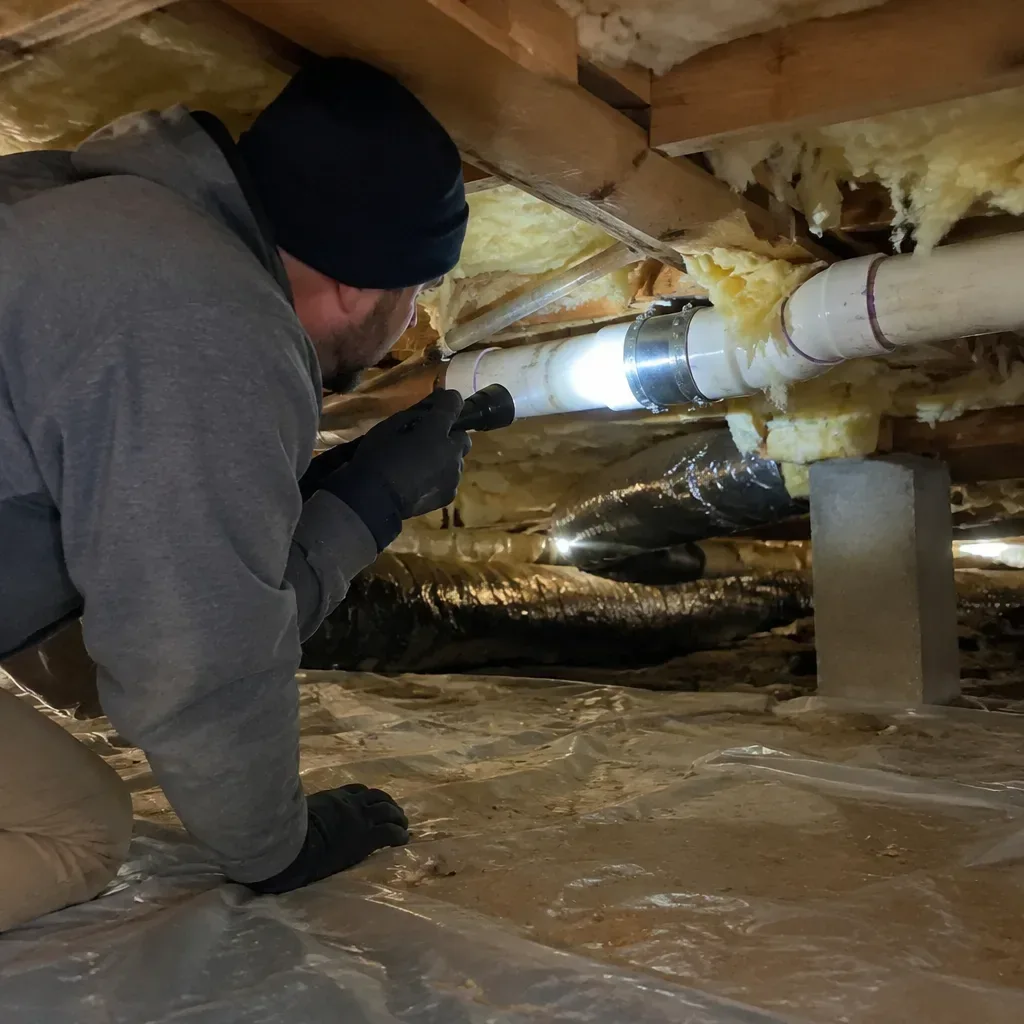
Brockton Burst Pipe Replacement Couplings
Follow cold-weather checks from exposed pipe to repair choice, then see when either coupling can join a replacement section.
A slip or push-fit coupling can connect a replacement section when its instructions cover the pipe materials and dimensions, its pressure and temperature ratings suit the line, and both ends can be prepared and joined as specified. Check the completed connection for leaks under pressure before closing the area.
Start With the Cold Exposed Line
In Brockton, start a cold-weather pipe check by looking for exposed supply lines, damp spots, or a change in water flow; then note where the line runs and what material it appears to be. A burst section may need replacement, and the coupling is the link between that new piece and the pipe left in place. The sections below explain how slip and push-fit designs differ, what to verify before choosing one, and which cold-season checks help you assess the finished connection.
A slip repair coupling can travel along a pipe during fitting, then move back across the gap left for a replacement section. That can help when fixed pipe ends leave little room to position a standard coupling. The travel must still leave enough contact with sound pipe on each side, and there must be room to shift the fitting into place. In a Brockton home, check that movement before choosing this style; a tight wall or joist space can limit it.
Before comparing fittings, identify the pipe system and measure the pipe ends and replacement piece. Copper, PEX, CPVC, and other approved pipe types can differ in dimensions and joining methods, even when they look similar. The burst pipe coupling must be intended for the particular materials and sizes at both ends. Brockton has multifamily housing as well as other home types, but a building category cannot tell you what pipe is installed inside a specific unit.
Choose How the Joint Will Move
Once the parts match on paper, examine the exposed ends. A cut that is slanted, rough, scratched, or distorted may prevent a seal from sitting as intended, so prepare each end as the fitting maker directs. Check that the new section can sit straight between the remaining pipe ends without pushing them out of line. In Brockton, where a repair may be inside a finished wall or ceiling, the space available for making clean cuts can also shape the fitting choice.
A push-fit pipe coupling makes its connection inside the fitting as the pipe enters it. The exact model’s instructions determine which pipe types it accepts, how the end should be prepared, and how far it must enter. If the product provides an insertion mark, that mark helps confirm the pipe reached the required depth. Do not choose by appearance alone: a fitting that slides onto a pipe may still be unsuitable for that material or use.
A slip style has a different installation constraint: it needs enough straight, sound pipe to move into place and then cover the joint with the required engagement on both sides. Measure beyond the visible damaged area, since weakened or misshapen pipe may not provide a suitable sealing surface. Also check whether nearby framing or other lines block the fitting’s travel. If the pipe cannot stay aligned while the coupling moves, another connection method may better suit the opening.
Prepare the Pipe Ends
A fitting that joins two pieces is not automatically suitable for a pressurized water line. Read its pressure and temperature limits and confirm they cover the conditions of the existing system; for drinking-water service, verify the product is rated for that use too. Keep the pipe aligned with the fitting so side pressure does not strain the new joint.
After assembly, the joint should be checked while the line is carrying water, before the opening is closed. Look around both coupling edges and the replacement section for fresh moisture, and confirm water flows through the line. A dry first glance is not a substitute for checking under pressure. In older finishes or a multifamily building, access may affect how the connection can be observed; water removal and repairs to damaged surfaces are separate from the pipe connection itself.
Check Ratings Before Closing
In Brockton, begin a cold-weather pipe check by noting the exposed line’s material and condition; winter risk alone does not show what caused a break. Homes near Beaver Brook, Salisbury Plain River, or Field Park still need a coupling matched to the actual pipe. For burst pipe section replacement, a slip repair coupling can slide back along the pipe to bridge a cut; a push-fit pipe coupling joins prepared ends by insertion. Check approved materials, dimensions, pressure and temperature limits, and potable-water rating. Follow the product’s cutting, end-preparation, insertion-depth, and positioning directions before putting the replacement section under pressure.
Use the instructions for the specific coupling to settle details such as permitted pipe types, size range, end preparation, insertion depth, assembly order, and operating limits. Compare those requirements with both ends left after the damaged section is removed and with the replacement pipe. The useful choice is the model whose installation can be completed within the available space while meeting every stated requirement. If one detail is unclear, the pros we connect you with can assess the pipe and parts together.
Coupling Checks in Order
- Identify both pipe materials and measure the ends and replacement piece before choosing a coupling.
- Shut off the supply and release pressure before cutting out the damaged pipe.
- Check required cut condition, insertion depth, and installation sequence in the model’s instructions.
- Compare the coupling’s approved pipe types and measured dimensions with both the sound line and the replacement piece; either mismatch can rule it out.
- Read how the ends must be cut and prepared, then check the specified insertion depth; a push-fit joint and a slip repair coupling install differently.
- Check that pressure, temperature, and drinking-water approvals cover the line’s use, and leave the new joint open to inspection until it passes a leak check.
Questions to Consider
Can a push-fit coupling join a replacement burst pipe section?
A slip repair coupling can work when the model suits the pipe material and size, both ends offer sound straight pipe for the specified engagement, and there is room to slide it into position. The maker’s instructions set the needed travel and installation steps. The completed connection also needs suitable pressure and temperature ratings for the line and should be checked for leaks under pressure.
When does a slip repair coupling fit a burst pipe?
A push-fit fitting grips the pipe and seals around its prepared surface. Check the required end preparation and insertion depth for each side; use any insertion mark the product provides. Similar-looking pipes are not proof of compatibility. The fitting must also meet the water line’s pressure, temperature, and drinking-water requirements where applicable.
What should I check before choosing a pipe coupling?
Restore water and inspect the coupling edges and the replacement pipe while the line is pressurized. Watch for moisture and confirm that water passes through the section. Reduced flow after the repair can point to a restriction or a pipe end that is not fully seated. Drying, water extraction, and rebuilding finishes may need separate providers.
What Should the Coupling Match?
Ask the pros we connect you with to identify the coupling and show how its instructions match the existing line and replacement section.
Call (508) 446-9387